
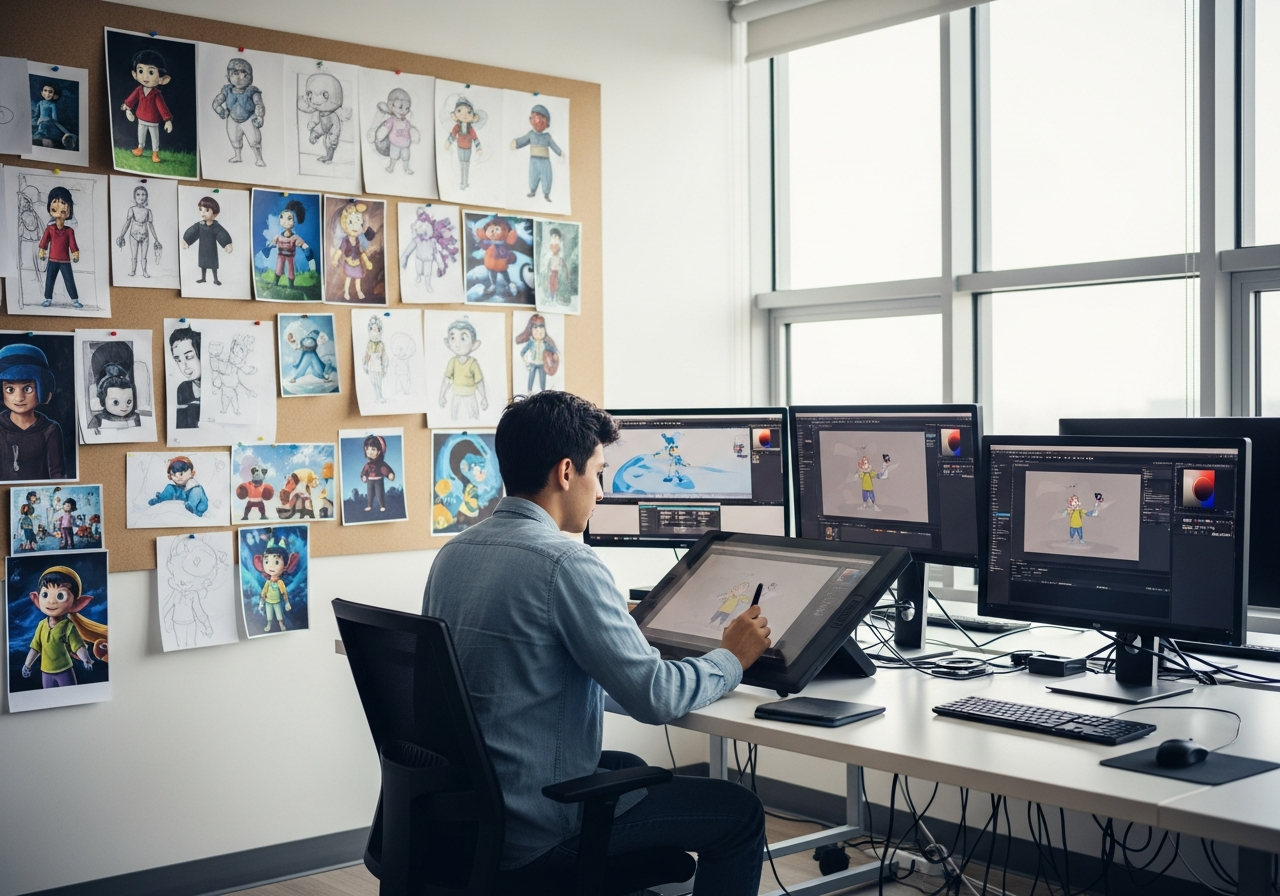
Canada’s animation industry is experiencing unprecedented growth, with a remarkable 6% job growth rate creating exciting opportunities for emerging talent. From the bustling studios of Toronto to Vancouver’s thriving animation hub, Canadian studios are actively seeking junior storyboard artists who can bring fresh perspectives to beloved animated series and feature films. This surge in demand reflects the industry’s expansion, driven by streaming platforms’ appetite for original content and Canada’s competitive tax incentives that attract international productions.
While traditional art education can be valuable, Canadian studios prioritize portfolio strength and practical skills over formal degrees when hiring junior storyboard artists. The key expectations center around three core areas: strong drawing and illustration fundamentals, compelling visual storytelling abilities, and proficiency with industry-standard software. Understanding these requirements and how they apply specifically within the Canadian animation landscape can make the difference between landing that first studio position and remaining on the sidelines.
Core Drawing and Illustration Skills
Canadian animation studios prioritize speed and clarity over artistic polish when evaluating junior storyboard artists. The ability to produce quick, legible sketches that effectively communicate story beats is far more valuable than creating museum-quality artwork. Studios like Nelvana and Atomic Cartoons consistently emphasize that storyboards serve as blueprints for animation, requiring clear visual communication rather than finished illustrations.
Observational drawing skills form the foundation of successful storyboarding, particularly for character consistency and environmental storytelling. Junior artists must demonstrate their ability to maintain character proportions and expressions across multiple panels while adapting to various animation styles that define Canadian productions. The following core skills are essential for any junior storyboard artist seeking employment in Canadian studios:
- Rapid gesture drawing and figure construction for dynamic character poses
- Consistent character model sheets and expression studies across different angles
- Environmental sketching with focus on staging and spatial relationships
- Clear line quality that reproduces well in digital formats and print
- Anatomy fundamentals for believable character movement and interaction
- Perspective drawing for establishing shots and complex scene layouts
- Adaptability across different art styles from realistic to highly stylized
Perspective and Composition Essentials
Understanding camera angles and framing techniques directly translates to effective storyboard composition in Canadian studios. Junior artists must demonstrate knowledge of cinematic language, including establishing shots, close-ups, and dynamic camera movements that enhance narrative flow. This film literacy becomes particularly important when working on action sequences or emotional character moments that define successful Canadian animated productions.
Studios expect junior storyboard artists to compose shots that guide the viewer’s eye naturally through each panel while maintaining visual clarity. The ability to use perspective to create depth and establish spatial relationships between characters and environments is crucial for productions ranging from preschool shows to young adult series that dominate the Canadian animation market.
Adapting to Animation Styles
Canadian studios often work on diverse projects requiring flexibility between 2D traditional animation, 3D computer animation, and increasingly popular hybrid approaches. Junior artists must demonstrate adaptability to match existing show styles, whether it’s the clean, character-driven approach favored by Nelvana productions or the more dynamic, action-oriented style seen in series produced by studios like Atomic Cartoons.
The ability to simplify complex designs while maintaining their essential characteristics is particularly valued in Canadian studios, where production schedules demand efficiency. Junior storyboard artists should be comfortable working within established style guides while bringing their own creative problem-solving skills to staging and composition challenges.
Visual Storytelling Proficiency
Beyond technical drawing skills, Canadian animation studios seek junior storyboard artists who understand narrative structure and emotional storytelling. The ability to break down scripts into compelling visual sequences requires knowledge of pacing, character development, and the hero’s journey that resonates with Canadian and international audiences. This storytelling proficiency extends to understanding how individual panels connect to create seamless narrative flow.
Canadian productions often emphasize character-driven stories with strong emotional cores, requiring storyboard artists to convey subtle character emotions and relationship dynamics through visual means. Junior artists must demonstrate their ability to identify key story beats and translate dialogue-heavy scenes into engaging visual sequences that maintain viewer interest.
The unique Canadian perspective in animation often focuses on inclusivity, environmental themes, and multicultural representation, requiring storyboard artists to be sensitive to these storytelling elements while maintaining universal appeal for international distribution.
Script Breakdown Techniques
Canadian studios expect junior storyboard artists to efficiently analyze scripts and identify the most effective visual approaches for each scene. This process involves understanding not just what happens in a scene, but why it matters to the overall story and how to convey that significance through staging, character positioning, and camera choices.
The script breakdown process in Canadian studios typically follows these essential steps that junior artists must master:
- Identify key story beats and emotional turning points within each scene
- Determine optimal shot types and camera angles to support the narrative
- Plan character staging and movement to enhance dialogue and action
- Consider pacing and panel count to match the intended episode timing
- Note specific animation requirements and technical considerations for production
- Incorporate director’s vision while suggesting creative improvements to staging
Technical Tools and Software Knowledge
Canadian animation studios utilize a diverse range of software tools, with many preferring hybrid workflows that combine traditional drawing techniques with digital efficiency. Junior storyboard artists must demonstrate proficiency in industry-standard software while maintaining the flexibility to adapt to studio-specific pipelines and preferences.
The software landscape in Canadian studios reflects both international industry standards and specific preferences that have evolved within the Canadian animation ecosystem. Understanding these preferences and demonstrating relevant skills can significantly impact hiring decisions for junior positions.
| Software | Key Uses for Juniors | Canadian Studio Preference |
|---|---|---|
| Adobe Photoshop | Digital sketching, panel layouts, basic animatics | High – Universal compatibility |
| Toon Boom Storyboard Pro | Complete storyboard creation, animatics, sound sync | Very High – Canadian company preference |
| TVPaint Animation | Traditional-style drawing, rough animation | Medium – Studio-specific workflows |
| Procreate | Mobile sketching, concept development | Growing – Remote work compatibility |
| Clip Studio Paint | Frame-by-frame drawing, detailed illustrations | Medium – Cost-effective alternative |
| Maya/Blender | 3D previs, camera planning for hybrid productions | Emerging – 3D integration trends |
Traditional vs Digital Workflows
Canadian studios increasingly favor hybrid approaches that leverage the speed of digital tools while maintaining the organic feel of traditional drawing techniques. Junior artists must understand when to use traditional pencil and paper methods versus digital alternatives, particularly during the initial creative exploration phase where ideas flow more naturally through physical sketching.
The choice between traditional and digital workflows often depends on project requirements, client preferences, and production timelines. Understanding these trade-offs helps junior artists adapt to different studio environments and project demands throughout their careers.
| Aspect | Traditional | Digital |
|---|---|---|
| Creative Speed | Faster initial sketching, organic flow | Instant revisions, copy-paste efficiency |
| Collaboration | Scanning required for sharing | Immediate sharing and feedback |
| Production Cost | Paper and scanning expenses | Software licensing costs |
| Revision Flexibility | Time-consuming major changes | Quick iterations and experiments |
| Remote Work | Limited compatibility | Full remote collaboration support |
AI and Emerging Tools
Canadian animation studios are beginning to explore AI-assisted tools for layout generation and background creation, but these technologies remain supplementary to traditional storyboarding skills. Junior artists should view AI tools as efficiency enhancers rather than replacements for fundamental drawing and storytelling abilities, as studios continue to value human creativity and decision-making in narrative development.
Virtual reality previsualization tools are gaining traction in larger Canadian studios for complex action sequences and camera planning. While not yet essential for junior positions, familiarity with emerging technologies demonstrates forward-thinking and adaptability that can set candidates apart in competitive hiring situations.
Portfolio Requirements for Canadian Studios
Canadian animation studios prioritize storytelling effectiveness over artistic polish when reviewing junior storyboard artist portfolios. The portfolio should demonstrate clear narrative thinking, efficient visual communication, and the ability to maintain consistency across sequences rather than showcasing individual illustration pieces. Studios want to see complete sequences that tell compelling stories, even if the artwork is relatively simple.
Successful portfolios for Canadian studios typically include animatics that demonstrate timing and pacing understanding, as these skills directly translate to production work. Including original story sequences alongside fan art or existing property adaptations shows creative initiative while proving technical competency with familiar characters and settings.
The portfolio should reflect awareness of Canadian animation sensibilities, including inclusive character representation, environmental consciousness, and the balance between entertainment and educational value that characterizes much of Canadian children’s programming. Here are essential portfolio elements that Canadian studios expect to see:
- Complete story sequences of 15-30 panels showing clear beginning, middle, and end
- Character turnarounds and expression sheets demonstrating consistency
- Simple animatic with basic timing to show understanding of pacing
- Action sequences that showcase dynamic staging and movement
- Dialogue scenes emphasizing character interaction and emotional beats
- Original story concepts that reflect Canadian cultural values
- Clean, professional presentation that works well in digital formats
Building Standout Sequences
Creating memorable portfolio sequences requires understanding what Canadian studios value most: clear storytelling that serves the broader narrative goals of their productions. Junior artists should focus on sequences that demonstrate problem-solving skills, such as how to stage a conversation between multiple characters or how to build tension in an action scene using camera angles and pacing.
Board tests are common in Canadian studio hiring processes, often requiring candidates to complete short sequences under time pressure. Practicing these scenarios while building portfolio pieces helps junior artists prepare for real studio situations where speed and clarity matter more than artistic perfection. The best sequences show personality and creative thinking while maintaining the technical proficiency that production work demands.
Studios particularly appreciate sequences that show awareness of animation production constraints, such as maintaining consistent character volumes for easier animation or designing shots that can be efficiently produced within typical Canadian studio budgets and timelines.
Education and Entry Pathways
Canadian animation studios offer multiple pathways for aspiring junior storyboard artists, with portfolio strength often outweighing formal educational credentials. While animation schools provide valuable foundation training and industry connections, many successful Canadian storyboard artists have entered the field through alternative routes, including production assistant positions, internships, and self-directed skill development.
The production assistant to junior artist pathway is particularly common in Canadian studios, allowing individuals to learn studio workflows while developing storyboarding skills. This approach provides practical experience with real production pressures while building relationships within the studio environment.
| Path | Requirements | Canadian Examples |
|---|---|---|
| Animation School Graduate | Diploma/degree, strong portfolio, industry connections | Vancouver Film School, Sheridan College, VANAS |
| Production Assistant Promotion | Studio experience, demonstrated art skills, internal referral | Nelvana, Atomic Cartoons, Mercury Filmworks |
| Self-Taught Portfolio | Exceptional self-directed learning, professional portfolio | Online learning platforms, mentorship programs |
| Internship Program | Student status or recent graduate, basic skills | Studio summer programs, government-sponsored initiatives |
| Freelance Transition | Established client base, proven delivery record | Independent projects, web series, commercial work |
| Related Industry Transfer | Comic book, illustration, or film experience | Comic book publishers, advertising agencies, film production |
Top Animation Schools in Canada
Canadian animation schools have earned international recognition for producing industry-ready graduates who understand both traditional animation principles and cutting-edge digital techniques. These institutions maintain close relationships with major studios, often providing direct pathways to employment through internship programs and industry showcases.
The following institutions represent the top choices for aspiring storyboard artists in Canada, each offering unique advantages and specializations:
- Vancouver Film School – Industry-focused curriculum with strong studio connections in the Vancouver market
- Sheridan College – Traditional animation excellence with world-renowned faculty and alumni network
- VANAS (Vancouver Animation School) – Flexible online and in-person programs designed for working professionals
- Seneca College – Comprehensive animation program with emphasis on digital production techniques
- Emily Carr University – Fine arts foundation with strong conceptual and storytelling components
- Concordia University – Film production integration with animation studies for narrative focus
Internships and Networking
Canadian animation studios like Nelvana and Atomic Cartoons regularly offer internship opportunities that provide invaluable real-world experience and industry connections. These programs often lead directly to junior positions, as studios prefer to hire candidates who already understand their production processes and company culture.
Industry events such as the Ottawa International Animation Festival and Toronto Animation Arts Festival International provide excellent networking opportunities for aspiring junior artists. These venues allow direct contact with studio recruiters, established professionals, and fellow newcomers who may become future collaborators or referral sources in the tight-knit Canadian animation community.
Soft Skills and Collaboration
Canadian animation studios operate as highly collaborative environments where junior storyboard artists must effectively communicate with directors, other artists, and production teams throughout the creative process. The ability to accept constructive feedback gracefully and implement changes quickly is essential for success, as storyboards undergo multiple revision cycles before final approval. Studios value team players who contribute positively to the creative atmosphere while maintaining professional standards under pressure.
Effective communication extends beyond artistic skills to include the ability to pitch ideas clearly, ask relevant questions about story requirements, and provide constructive input when appropriate. Junior artists who demonstrate initiative in problem-solving while respecting the established hierarchy and creative vision tend to advance more quickly within Canadian studio environments.
Cultural sensitivity and awareness are particularly important in Canadian studios, which often create content for diverse audiences and emphasize inclusive representation. Junior artists must navigate these considerations thoughtfully while maintaining the creative integrity and entertainment value that makes Canadian animation successful in both domestic and international markets.
Handling Director Notes
Receiving and implementing director feedback efficiently is a crucial skill for junior storyboard artists in Canadian studios, where production schedules demand quick turnarounds and clear communication. The ability to interpret sometimes abstract creative direction and translate it into specific visual solutions sets successful junior artists apart from their peers.
The following approach helps junior artists manage director feedback effectively while building positive working relationships:
- Listen actively and take detailed notes during feedback sessions to ensure nothing is missed
- Ask clarifying questions immediately if directions seem unclear or contradictory
- Implement changes systematically, addressing the most important story points first
- Present multiple solutions when possible to give directors options for complex problems
- Follow up proactively to confirm that revisions meet expectations before proceeding
Studio-Specific Expectations
Each major Canadian animation studio has developed unique approaches to storyboarding that reflect their production specialties, target audiences, and creative philosophies. Understanding these differences helps junior artists tailor their applications and prepare for specific studio environments. Nelvana, for instance, emphasizes character-driven storytelling and emotional clarity, while Atomic Cartoons often focuses on dynamic action sequences and visual comedy that appeals to diverse age groups.
Mercury Filmworks, known for its service work on international productions, requires junior artists who can adapt quickly to different art styles and production requirements from various clients. This flexibility demands strong fundamental skills and the ability to match existing show aesthetics while maintaining production quality standards.
Studios also vary in their production pipelines, with some favoring traditional hand-drawn approaches while others embrace digital-first workflows. Junior artists benefit from researching specific studio preferences and recent productions to understand what skills and approaches will be most valued during the application process.
| Studio | Junior Focus | Key Job Traits |
|---|---|---|
| Nelvana | Character development, emotional storytelling | Strong character acting, dialogue staging |
| Atomic Cartoons | Action sequences, visual comedy | Dynamic poses, comedic timing |
| Mercury Filmworks | Style adaptation, client service work | Flexibility, attention to style guides |
| DHX Media (WildBrain) | Preschool content, educational value | Simple, clear staging, child psychology awareness |
| 9 Story Media Group | Children’s series, international co-productions | Cultural sensitivity, universal appeal |
| Guru Studio | Innovative storytelling, artistic experimentation | Creative problem-solving, unique visual approaches |
Toronto vs Vancouver Markets
The choice between Toronto and Vancouver significantly impacts career opportunities for junior storyboard artists, as each market has developed distinct characteristics in terms of studio concentration, production types, and growth trajectories. Toronto’s established animation scene offers stability and diverse opportunities, while Vancouver’s rapidly expanding market provides exciting growth potential and closer connections to the American entertainment industry.
Cost of living considerations also play a crucial role in career planning, as salary expectations must align with housing costs and general living expenses in each city. Understanding these trade-offs helps junior artists make informed decisions about where to focus their job search efforts.
| Location | Pros | Cons |
|---|---|---|
| Toronto | Established studios, diverse projects, cultural scene | Higher competition, expensive housing, traditional workflows |
| Vancouver | Rapid growth, US connections, innovative techniques | Extreme housing costs, newer industry relationships |
| Ottawa | Mercury Filmworks presence, lower living costs | Limited studio options, smaller creative community |
| Halifax | DHX/WildBrain hub, affordable lifestyle | Geographic isolation, weather challenges |
Job Posting Insights
Analysis of Canadian studio job postings reveals consistent patterns in the skills and qualifications most valued for junior storyboard artist positions. Beyond basic drawing abilities, studios frequently emphasize 2D animation understanding and basic rigging knowledge, reflecting the integrated nature of modern animation production where storyboard artists may contribute to multiple pipeline stages.
Recent postings also highlight the growing importance of remote work capabilities and digital collaboration skills, trends that accelerated during the pandemic and have become permanent fixtures in Canadian studio operations. Junior artists who can demonstrate effective remote work practices and strong digital communication skills have significant advantages in the current market.
Common Pitfalls and Pro Tips
Many aspiring junior storyboard artists make the critical error of over-polishing their work, creating beautiful illustrations that fail to demonstrate the speed and efficiency that Canadian studios require. Production environments demand artists who can produce clear, effective boards quickly rather than those who labor over finished artwork. This fundamental misunderstanding of storyboarding’s function often eliminates otherwise talented candidates from consideration.
Another common mistake involves focusing exclusively on action sequences while neglecting dialogue scenes and character interaction moments that comprise the majority of Canadian animated productions. Studios need junior artists who can handle quiet character moments with the same skill and attention as dynamic action scenes, as emotional storytelling drives much of the content produced in the Canadian market.
The growth in junior positions has been significantly supported by Canadian tax credits and government incentives that make it financially attractive for studios to expand their workforce. Understanding this economic context helps junior artists appreciate why the market remains strong and how their roles contribute to the broader success of Canadian animation on the international stage.
Canadian studios consistently observe these patterns among successful junior storyboard artists versus those who struggle to find employment:
- Focus on storytelling clarity over artistic polish – clear communication beats beautiful drawing
- Develop speed through practice – studios value artists who can work efficiently under pressure
- Study existing Canadian productions to understand industry storytelling preferences and style requirements
- Maintain consistent character models across sequences rather than varying styles within single projects
- Practice board tests regularly to build comfort with time-pressure scenarios common in hiring processes
- Network actively within the Canadian animation community through events, online forums, and social media
- Stay current with industry trends while maintaining strong fundamental skills that remain universally valuable
Interview and Test Prep
Board tests administered during the interview process typically require candidates to complete 8-15 panels within a 2-4 hour timeframe, testing both artistic ability and time management skills under pressure. Canadian studios design these tests to simulate real production conditions, often providing script excerpts from actual projects to gauge how candidates approach unfamiliar content and character designs.
Successful test completion requires strategic time allocation, with experienced candidates typically spending 10-15 minutes reading and planning before beginning to draw. This upfront investment in understanding the story beats and character relationships usually results in more cohesive sequences that demonstrate professional-level thinking rather than just drawing skills.
The interview portion often focuses on problem-solving scenarios and creative collaboration rather than technical knowledge, as studios want to assess how candidates will function within their team environments. Preparing specific examples of overcoming creative challenges and receiving feedback constructively helps candidates demonstrate the soft skills that determine long-term success in Canadian animation studios.